Programme

Special symposia

Six symposia, each shaped by internationally recognised researchers, anchor the scientific programme of META 2027.

Programme

Six focused symposia

The special symposia are a central scientific component of META 2027. Each is curated by leading researchers around one front of metamaterials and photonics, and runs inside the main programme across the four days.

Symposium I

Hybrid Nanomaterials and Metastructures for Photonics, Sensing and Energy

This Special Symposium focuses on both experimental and theoretical studies of optically active hybrid nanomaterials, such as semiconductors, metals, dielectrics, polymers, biomolecules, etc. The Symposium is dedicated to a wide range of fundamental investigations and applications of optically active materials, including bottom-up synthesis, top-down nanofabrication, and the chemical and physical examination of the new properties of these hybrid nanomaterials.

The central issues to be addressed in the Symposium are new physical and chemical functionalities arising from novel nanostructure and/or interactions between nanoscale building blocks.

Symposium Chairs
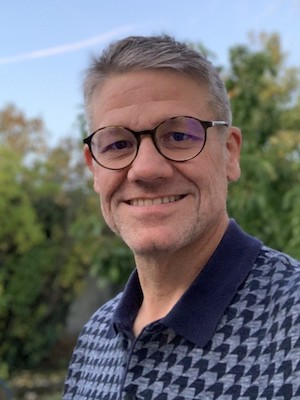
Jérôme Plain
Jérôme PlainTechnological University of Troyes, France
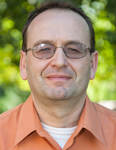
Alexander Govorov
Alexander GovorovOhio University, USA
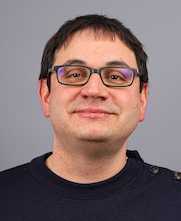
Davy Gérard
Davy GérardTechnological University of Troyes, France
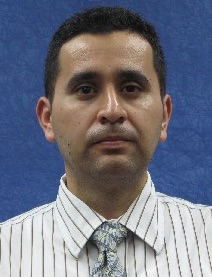
Pedro Hernandez Martinez
Pedro Hernandez MartinezNanyang Technological University, Singapore

Topics

Plasmonic nanocrystal assemblies and metastructures Hybrid structures with exciton and plasmon resonances New materials for nano-optics Hot plasmonic electrons in nanostructures Time-resolved studies for fast dynamics Quantum effects in plasmonic systems Chiral nanostructures and metastructures Bio-assembled nanomaterials with chirality Optical meta-materials and meta-surfaces Thermoplasmonics and photogeneration of heat Hybrid nanomaterials for catalysis and solar energy Applications in biophysics and bioimaging Spectroscopic applications (SERS, Infrared, THz) Nanomaterials for structural colors Collective resonances in metasurfaces

Invited Speakers

Invited speakers will be announced once confirmed.
Back to symposia ↑

Symposium II

New trends in nanophotonics and advanced materials

This symposium will address the current trends in nanophotonics, metamaterials and metasurfaces, as well as their materials challenges and the best approaches for addressing them. It will also focus on novel applications and manufacturing techniques.

Symposium Chairs

Junsuk Rho
Junsuk RhoPOSTECH, Korea
Hakjoo Lee
Hakjoo LeeCAMM, Korea
Namkyoo Park
Namkyoo ParkSeoul National University, Korea
Seong Ok Han
Seong Ok HanKorea Institute of Energy Research, Korea

Topics

Quantum nano-optics & optical antennas Nanophotonics for bio- and chemo-sensing Active and tunable optical metamaterials Nonlinear optics in nanostructures Metasurfaces & applications New plasmonic materials Nanomanipulation with light Nanophotonics for energy applications Theory and modelling Topological photonics Graphene based metamaterials Elastic, Acoustic, and Seismic Metamaterials Novel nanofabrication techniques Emerging applications and techniques

Invited Speakers

Invited speakers will be announced once confirmed.
Back to symposia ↑

Symposium III

Advanced passive and active metasurfaces and zero-index materials

Metasurfaces are arrays of subwavelength anisotropic light scatterers (optical antennas) that can produce abrupt changes in the phase, amplitude, or polarization of light. Recent years have seen significant progress in the design of metasurfaces that refract and focus light, enabling unique properties and applications such as holograms, optical vortex generation and detection, ultrathin focusing lenses and perfect absorbers.

This symposium will cover the fundamental principles and technological applications of metasurfaces, and aims in particular to explore new materials, structures and advanced optical functionalities of metasurfaces, for applications spanning imaging, bio- and chemical sensing, energy harvesting, communications and data storage.

Symposium Chairs

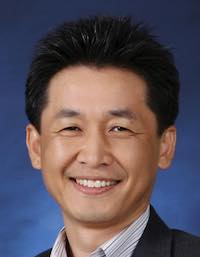
Howard Lee
Howard LeeUniversity of California, Irvine, USA
Pin Chieh Wu
Pin Chieh WuNational Cheng Kung University, Taiwan
Wen-Hui (Sophia) Cheng
Wen-Hui (Sophia) ChengNational Cheng Kung University, Taiwan

Topics

Active metasurfaces Nonlinear metasurfaces Quantum metasurfaces Topological photonics New materials for metasurfaces Passive metasurfaces with advanced properties Deep-learning design for nanophotonics Metasurfaces for bio-sensing New applications of metasurfaces Large scale metasurfaces

Invited Speakers

Invited speakers will be announced once confirmed.
Back to symposia ↑

Symposium IV

Chirality, magnetism, and magnetoelectricity: Separate phenomena and joint effects in metamaterial structures

Chirality, magnetism and magnetoelectricity are three distinct phenomena. Can they appear as joint effects, in both optics and microwaves? This symposium discusses such joint effects in metamaterial structures, viewed through the different aspects of field–matter interaction.

Symposium Chair

Eugene Kamenetskii
Eugene KamenetskiiBen Gurion University of the Negev, Israel

Topics

Chiral dichroism and magnetism Chirality and magnetoelectricity Chirality, magnetism, and topology Time-reversal symmetry breaking Magneto-plasmonic metamaterials Matter interaction with twisted fields Magnetoelectric meta-atoms Chiral exceptional points Chiral excitons Magnetoelectric effect Axion electrodynamics

Invited Speakers

Invited speakers will be announced once confirmed.

Back to symposia ↑

Symposium V

Architectured Elastic and Acoustic Metamaterials & Phononic Crystals

The scientific interest in elastic and acoustic metamaterials / phononic crystals has witnessed remarkable growth in recent years. This is due to their great potential to achieve unconventional dynamic and quasi-static behaviors, as well as to the advancement of the manufacturing techniques leading to increasingly complex designs ("architectures") spanning multiple scale lengths or allowing space and time modulation of the material properties.

Symposium Chairs

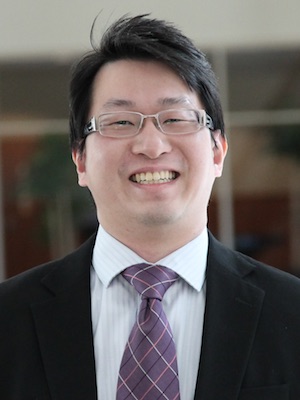
Jensen Li
Jensen LiHKUST, Hong Kong
Jean-Philippe Groby
Jean-Philippe GrobyUniversité du Mans, France
Vincent Pagneux
Vincent PagneuxLAUM - CNRS, France
Vicent Romero-García
Vicent Romero-GarcíaUniversidad Politècnica de València, Spain
Stefano Laureti
Stefano LauretiUniversity of Calabria, Italy

Topics

The ERC Starting Grant POSEIDON (Grant Agreement No. 101039576) The MAGNIFIC project (Grant Agreement No. 101091968) The MetacMed project (HORIZON TMA MSCA Doctoral Networks - Grant Agreement N°101119738) Architectured elastic and acoustic metamaterials Airborne and underwater wave control Bio-inspired metamaterials Metamaterials for biomedical applications Topological protection in phononic crystals Non-Hermitian and nonreciprocal metamaterials Tunability and reconfigurability Nano-opto-electro-mechanical systems

Invited Speakers

Invited speakers will be announced once confirmed.
Back to symposia ↑

Symposium VI

Advanced Techniques for Computational Electromagnetics

This symposium aims to bring together experts in computational electromagnetics for a comprehensive examination of recent advancements and challenges in simulating complex materials and devices. The focus of the symposium includes addressing general issues in applied computational electromagnetics, with the option to delve into specific applications, techniques, codes, or computational challenges.

Symposium Chair

Maha Ben Rhouma
Maha Ben RhoumaGustave Eiffel University - ESYCOM Lab, France

Topics

Wave Propagation and Programmable Metasurfaces Optical Communication and Terahertz Electronics Nanophotonic and Metamaterials Design 5G/6G, EMC, and EM Protection AI and Machine Learning for EM Problems Scattering in Complex Environments Quantum EM and Multiphysics Modeling Semi-Analytical Methods and Fast Algorithms High-Performance Computation

Invited Speakers

Invited speakers will be announced once confirmed.

Back to symposia ↑

Interested in organizing a focused session?

META also welcomes proposals for Special Sessions on emerging themes.