2026 Archive
Federico Capasso
Harvard University · USA
From Classical to Quantum Metasurfaces for Multiphoton Interferometry
WATCH THE PLENARY →
Program
META plenary and keynote lectures bring together scientists whose work is defining new directions across metamaterials, photonics and light–matter interactions. Plenary lectures are 35 minutes and keynote lectures are 30 minutes.
META 2027 · Niagara Falls
We are delighted to announce the first confirmed plenary speakers of META 2027. Further plenary and keynote speakers will be announced as the program develops.
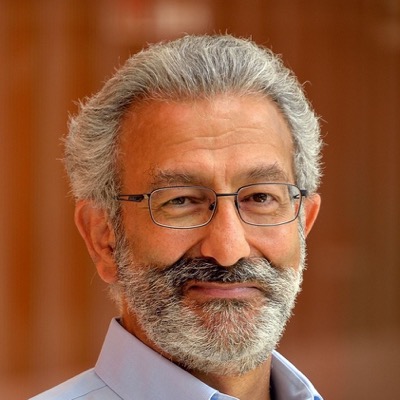
Plenary Speaker
University of Pennsylvania
USA
Nader Engheta is the H. Nedwill Ramsey Professor at the University of Pennsylvania, with affiliations in the Departments of Electrical and Systems Engineering, Bioengineering, Physics and Astronomy, and Materials Science and Engineering. He received his BS degree from the University of Tehran and his MS and PhD degrees from the California Institute of Technology (Caltech). His research spans optics, photonics, metamaterials, nano-optics, graphene photonics, and imaging and sensing inspired by the eyes of animal species. He is a member of the US National Academy of Engineering, the American Academy of Arts and Sciences and the US National Academy of Inventors. His awards include the 2023 Benjamin Franklin Medal of the Franklin Institute, the 2020 Isaac Newton Medal and Prize of the Institute of Physics, the 2020 Max Born Award of Optica and the 2015 SPIE Gold Medal.

Plenary Speaker
Rice University
USA
Naomi J. Halas is the Stanley C. Moore Professor in Electrical and Computer Engineering, Professor of Biomedical Engineering, Chemistry, and Physics and Astronomy, and founding director of the Laboratory for Nanophotonics at Rice University, where she also directs the Smalley-Curl Institute. She joined the Rice faculty in 1990. Halas is a pioneer of plasmonics, creating the concept of the “tunable plasmon” and inventing a family of nanoparticles with resonances spanning the visible and infrared regions of the spectrum. She co-founded Nanospectra Biosciences, which develops photothermal therapies for cancer and other diseases based on her nanoparticles. She is a member of the National Academy of Sciences, the National Academy of Engineering and the American Academy of Arts and Sciences, and the recipient of the 2024 Optica C.E.K. Mees Medal.
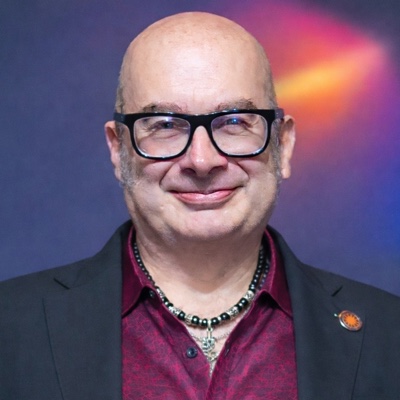
Plenary Speaker
INRS
Canada
Roberto Morandotti is a Full Professor at INRS-EMT (Varennes, Quebec, Canada), where he leads the Ultrahigh Speed Light Manipulation Laboratory and holds a Tier 1 Canada Research Chair. He received his MS in physics from the University of Genova and his PhD in electronics engineering from the University of Glasgow, and conducted postdoctoral research at the Weizmann Institute of Science and the University of Toronto. His research spans integrated photonics for quantum technologies, nonlinear and ultrafast optics, and terahertz science. He received the 2026 Optica Max Born Award “for pioneering experiments in chip-scale quantum light sources and complex entangled states, as well as for groundbreaking contributions in nonlinear, ultrafast, and terahertz optics”. He is a Fellow of Optica, the Royal Society of Canada, IEEE, APS, SPIE and IoP, among others.

Plenary Speaker
Imperial College London
UK
John Pendry has worked at the Blackett Laboratory, Imperial College London, since 1981. His research at Imperial College reflects his broad interests in physics but has recently concentrated on optics and electromagnetism in general. In collaboration with scientists at The Marconi Company he designed a series of ‘metamaterials’ whose properties owed more to their micro-structure than to the constituent materials. The metamaterial concept caught on and now is a major topic not only of research activity, but also of application to 5G and 6G network technology, MRI, satellite communications and much else, though popular interest has concentrated on his design for a cloak of invisibility.
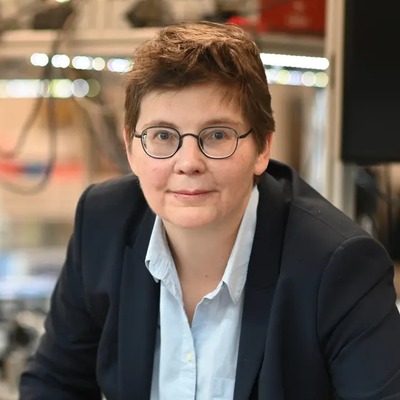
Plenary Speaker
Max Born Institute
Germany
Nathalie Picqué is Director at the Max Born Institute for Nonlinear Optics and Short Pulse Spectroscopy and Professor of Physics at Humboldt University of Berlin, Germany. With her team, she explores new insights in optical and molecular fundamental physics using advanced tools of laser science, and she is a pioneer of broadband interferometry with optical frequency combs. An Optica Fellow, she has received numerous awards, including the 2024 William F. Meggers Award of Optica.
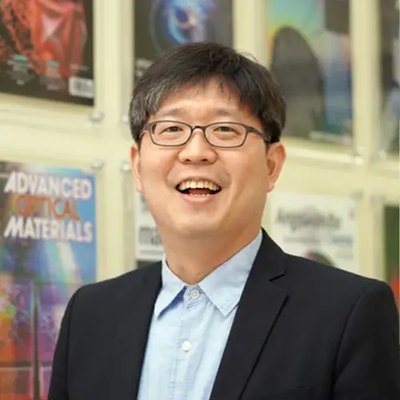
Plenary Speaker
POSTECH
Korea
Plenary lecture
“Sustainable manufacturing of optical metasurfaces with engineered optical materials”
Junsuk Rho is the Yeonsan Endowed Chair Professor and Mu-Eun-Jae Endowed Chair Professor at Pohang University of Science and Technology (POSTECH), Korea, with appointments in Chemical Engineering, Mechanical Engineering and Electrical Engineering. He received his B.S. from Seoul National University, his M.S. from the University of Illinois at Urbana-Champaign and his Ph.D. from the University of California, Berkeley, before working at Lawrence Berkeley National Laboratory and as a Ugo Fano Fellow at Argonne National Laboratory. He has published more than 380 journal papers; his honors include the Korean Presidential Early Career Award for Scientists and Engineers (2019), Clarivate Highly Cited Researcher recognition (2023, 2024) and the 2024 ACS Nano Lectureship.
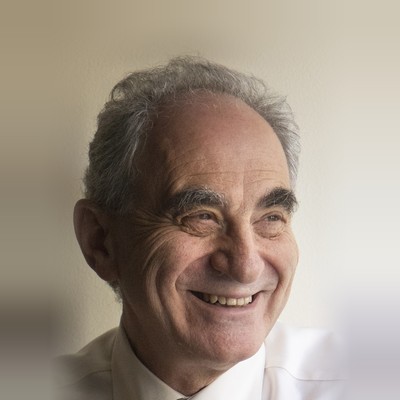
Plenary Speaker
University of California,
Berkeley · USA
Plenary lecture
“Can Physics & Optical Science Expedite Artificial Intelligence?”
Eli Yablonovitch is Professor in the Graduate School of Electrical Engineering and Computer Sciences at UC Berkeley and former Director of the NSF Center for Energy Efficient Electronics Science (E3S). He is regarded as a Father of the Photonic BandGap concept, and he coined the term “Photonic Crystal”. In his photovoltaic research, he introduced the 4(n squared) (“Yablonovitch Limit”) light-trapping factor that is in worldwide use for almost all commercial solar panels. He pointed out that strained lasers would have lower threshold current, and almost all internet communication is now through strained lasers. He is a Member of the National Academy of Engineering, the National Academy of Sciences and the National Academy of Inventors, and a Foreign Member of the Royal Society of London. His awards include the Benjamin Franklin Medal, the IEEE Edison Medal, the Isaac Newton Medal of the UK Institute of Physics.

Plenary Speaker
University of Southampton, UK
& Texas A&M University, USA
Nikolay Zheludev’s research interests are in nanophotonics and metamaterials. He is Deputy Director of the Optoelectronics Research Centre at the University of Southampton, UK and Hagler Fellow at the Institute for Advanced Study, Texas A&M University USA. He is a Fellow of the Royal Society (UK) and a Member of the US National Academy of Engineering, and a Fellow of the European Physical Society, the Optical Society (OSA) and the Institute of Physics (London). His awards include the Michael Faraday Gold Medal, the European Physical Society Quantum Electronics Prize, the Thomas Young Medal, and the President of Singapore Science and Technology Award.

Keynote Speaker
Purdue University
USA
Alexandra Boltasseva is the Ron and Dotty Garvin Tonjes Distinguished Professor of Electrical and Computer Engineering, with a courtesy appointment in Materials Engineering, at Purdue University. She received her PhD in electrical engineering from the Technical University of Denmark (DTU) in 2004. Her research focuses on nanophotonics, quantum photonics and optical materials. She is the 2023 recipient of the R.W. Wood Prize (Optica) and a 2022 Guggenheim Fellow, and received the 2013 IEEE Photonics Society Young Investigator Award and the 2013 Materials Research Society Outstanding Young Investigator Award. She is a Fellow of the National Academy of Inventors, MRS, IEEE, Optica and SPIE, and a former Editor-in-Chief of Optical Materials Express.

Keynote Speaker
Massachusetts Institute of
Technology · USA
Svetlana V. Boriskina is a Principal Research Scientist in the Department of Mechanical Engineering at the Massachusetts Institute of Technology (MIT), where she leads the Multifunctional Metamaterials (META) Lab. She holds a PhD in Physics and Mathematics from Kharkiv National University, Ukraine, and worked at the University of Nottingham, Kharkiv National University and Boston University before joining MIT in 2012. Her research blends nanophotonics, plasmonics, thermodynamics and mechanics, with projects on smart photon-managing fabrics, new meta-materials that manipulate light, and solar-harvesting platforms. Her honours include the MIT Water Innovation Prize (2021), the TechConnect Innovation Award (2019) and the Joint Award of ICO and ICTP (2007).

Keynote Speaker
University of Toronto
Canada
George V. Eleftheriades is a Professor of Electrical and Computer Engineering at the University of Toronto, where he holds the Velma M. Rogers Graham Chair in Engineering. A recognized pioneer of metamaterials, he introduced in 2002 the concept of using transmission lines to realize negative-index metamaterials, and more recently pioneered Huygens’ metasurfaces and their antenna applications. His awards include the 2025 IEEE Electromagnetics Award, the 2008 IEEE Kiyo Tomiyasu Technical Field Award, the 2015 IEEE AP-S John Kraus Antenna Award and the 2019 IEEE Antennas and Propagation Society’s Distinguished Achievement Award. He is an IEEE Fellow, a Fellow of the Canadian Academy of Engineering and of the Royal Society of Canada, and was elected in 2026 an international member of the U.S. National Academy of Engineering. His research group focuses on electromagnetic and optical metamaterials and on metasurfaces for 6G and radars.
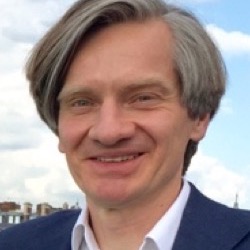
Keynote Speaker
Trinity College Dublin
Ireland
Ortwin Hess is Chair Professor of Quantum Nanophotonics and Research Ireland Professor in the School of Physics and the CRANN Institute of Trinity College Dublin, Ireland, Co-Director of Rinn Quantum, and Editor-in-Chief of the gold open-access journal APL Quantum. Previously he held the Leverhulme Chair in Metamaterials at Imperial College London and was a professor at the University of Surrey. His research bridges quantum nanophotonics with semiconductor and metamaterials physics, laser science and bio-medical photonics; he discovered the ‘trapped-rainbow’ principle and pioneered active nanoplasmonics and optical metamaterials with quantum gain, for which he received the Royal Society Rumford Medal. He is a Fellow of the Institute of Physics and of Optica.
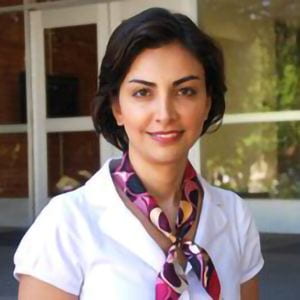
Keynote Speaker
University of California,
Los Angeles · USA
Mona Jarrahi is a Professor and Northrop Grumman Endowed Chair in Electrical and Computer Engineering at the University of California Los Angeles, where she directs the Terahertz Electronics Laboratory. Following postdoctoral research at the University of California Berkeley and an Assistant Professorship at the University of Michigan Ann Arbor, she joined UCLA in 2013. Her research develops ultrafast electronic and optoelectronic devices and integrated systems for terahertz, infrared and millimeter-wave sensing, imaging, computing and communication, using novel materials, plasmonic nanostructures and quantum structures. Her work has resulted in more than 400 publications and 280 invited talks. Her awards include the Presidential Early Career Award for Scientists and Engineers, a Moore Inventor Fellowship, a Guggenheim Fellowship and the IET A F Harvey Engineering Research Prize. She is a Fellow of AAAS, IEEE, Optica, SPIE, APS and the Institute of Physics.

Keynote Speaker
Duke University
USA
Natalia Litchinitser is a Michael J. Fitzpatrick Distinguished Professor of Electrical and Computer Engineering, Professor of Physics and Mechanical Engineering, and Materials Science at Duke University. Her research focuses on nonlinear and quantum optics in engineered nanostructures, metamaterials, and topological photonics, as well as on the engineering of light beams themselves. Natalia Litchinitser was previously a Professor of Electrical Engineering at the University at Buffalo, The State University of New York, a Member of Technical Staff at Bell Laboratories, Lucent Technologies, and a Senior Member of Technical Staff at Tyco Submarine Systems. She authored 8 invited book chapters and more than 350 journal and conference papers. She is a Fellow of IEEE, APS, Optica, and SPIE. She serves as the Research Program Director of the Photonics Materials Program at the Fitzpatrick Institute of Photonics.
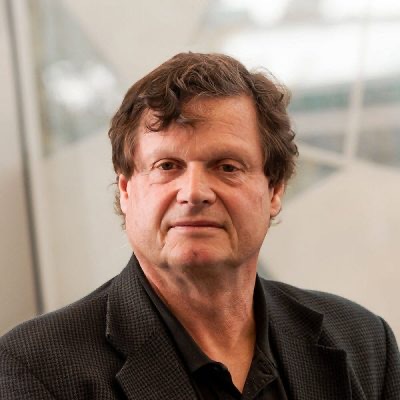
Keynote Speaker
Rice University
USA
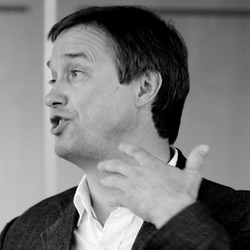
Peter Nordlander holds the Wiess Chair and is Professor of Physics and Astronomy, of Electrical and Computer Engineering, and of Materials Science and NanoEngineering at Rice University. He received his doctorate in theoretical physics from Chalmers University of Technology in 1985, held postdoctoral positions at the IBM Thomas J. Watson Research Center, AT&T Bell Laboratories and Rutgers University, and joined Rice in 1989. His research concerns the theoretical and computational modeling of plasmonics and nanophotonics. He has authored more than 350 refereed articles and has been a Highly Cited Researcher since 2013. His awards include the Willis E. Lamb Award for Laser Science and Quantum Optics (2013), the Frank Isakson Prize for Optical Effects in Solids (2014), the R. W. Wood Prize for Optics (2015) and the Eni Energy Transition Prize (2022). He is a Fellow of the APS, AAAS, SPIE, Optica and MRS.
Keynote Speaker
Purdue University
USA
Vladimir M. Shalaev is Scientific Director for Nanophotonics at the Birck Nanotechnology Center and Distinguished Professor of Electrical and Computer Engineering at Purdue University. His research spans nanophotonics, plasmonics, optical metamaterials and quantum photonics. His awards include the APS Frank Isakson Prize for Optical Effects in Solids, the Optica Max Born Award, the Willis E. Lamb Award for Laser Science and Quantum Optics, the IEEE Photonics Society William Streifer Scientific Achievement Award, the Rolf Landauer Medal of the ETOPIM International Association and the UNESCO Medal for the development of nanosciences and nanotechnologies. He was recognized as a Highly Cited Researcher in physics by the Web of Science Group in 2017–2023. He is a Fellow of the IEEE, APS, SPIE, MRS and Optica.
From the META Archive
While the META 2027 program is being prepared, watch the plenary lectures recorded at META 2026 in Dublin.
Plenary Archive
Since 2014, 72 plenary lectures by 43 scientists have shaped the META program. Selected lectures are available on the META YouTube channel.