Call for Papers

Present your research at META 2027

The 17th International Conference on Metamaterials, Photonic Crystals and Plasmonics takes place at the Niagara Falls Convention Centre, Ontario, Canada, July 13–16, 2027. META invites original contributions addressing fundamental advances, emerging concepts, devices and applications across metamaterials, photonics, plasmonics and structured light–matter interactions.

Call for Papers opens September 1, 2026  ·  Submission deadline February 12, 2027

How it works

Three steps to a tracked submission

1

Create your account

Register on the META Author & Submission Portal with your name, affiliation and email.

2

Prepare your manuscript

Prepare your contribution using the official META 2027 template and export it as a PDF.

3

Submit and track

Upload through the portal and follow your submission's status from the same account.

Open the Author & Submission Portal for the full walkthrough →

The scientific scope

Four submission tracks

Contributions are submitted to one of four tracks. They span the six thematic frontiers of the scientific program, and determine how submissions are routed for review.

Track 1 Metamaterials, Metasurfaces & Structured Waves

Fundamental concepts and emerging approaches for controlling electromagnetic and other wave phenomena through engineered materials and interfaces.

  • Electromagnetic metamaterials and metasurfaces
  • Flat optics and meta-optics
  • Huygens, dielectric and resonant metasurfaces
  • Chiral, bianisotropic and nonreciprocal media
  • Hyperbolic and epsilon-near-zero systems
  • Tunable, active and programmable metasurfaces
  • Spatiotemporal and time-varying metamaterials
  • Non-Hermitian and parity-time-symmetric systems
  • Structured light and wavefront engineering
  • Transformation optics and scattering control
  • Acoustic, elastic, mechanical and thermal metamaterials

Track 2 Plasmonics, Nano-Optics & Light–Matter Interactions

Nanoscale control of optical fields and their interaction with matter, from fundamental mechanisms to spectroscopy, sensing and energy conversion.

  • Plasmonics and nano-optics
  • Nanoantennas and optical resonators
  • Near-field optics and nanoscale imaging
  • Field enhancement and nanofocusing
  • Strong and ultrastrong light–matter coupling
  • Polaritons and hybrid light–matter states
  • Ultrafast and nonlinear nanophotonics
  • Molecular and quantum emitters in nanophotonic environments
  • Nanophotonic sensing and spectroscopy
  • Surface-enhanced spectroscopy
  • Hot-carrier and photochemical processes
  • Nanophotonics for energy, environment and biomedical applications
  • Two-dimensional and van der Waals materials

Track 3 Photonic Crystals, Topological & Quantum Photonics

Periodic, structured and quantum photonic systems for controlling propagation, emission, information and fundamental states of light.

  • Photonic crystals and photonic band-gap engineering
  • High-Q cavities and nanocavities
  • Slow light and dispersion engineering
  • Photonic crystal fibers
  • Topological photonics
  • Non-Hermitian photonic systems
  • Quantum states of light
  • Single-photon sources and detectors
  • Quantum emitters and nanophotonic interfaces
  • Spin–photon interfaces
  • Integrated quantum photonics
  • Quantum sensing and metrology
  • Quantum information processing
  • Quantum and nonlinear photonic platforms

Track 4 Emerging Platforms, Design, Fabrication & Applications

Methods and technologies enabling the discovery, realization and translation of new metamaterial and photonic concepts.

  • Computational electromagnetics and multiphysics modeling
  • Inverse design and topology optimization
  • AI and machine learning for photonics and metamaterials
  • Generative and data-driven design
  • Micro- and nanofabrication
  • Additive and scalable manufacturing
  • Self-assembled photonic and metamaterial structures
  • Advanced optical and structural characterization
  • Integrated and reconfigurable photonic platforms
  • Optical computing and information processing
  • Imaging and computational imaging
  • Sensing and diagnostics
  • Sustainable photonics and energy technologies
  • Emerging applications of metamaterials and nanophotonics

What to submit

Two to four pages — your choice

Contributed papers

Submit an extended abstract or a full contribution of two to four pages, using the official META 2027 template. Authors choose the length that fits their work — both are reviewed on the same criteria. It should contain:

  • a short abstract of 50 words at most;
  • a concise description of the motivation and context;
  • the principal methods and results;
  • figures and references where appropriate;
  • enough information for the Technical Program Committee to assess the scientific contribution.

Format: PDF  ·  Length: 2 to 4 pages

Download the official META 2027 template ↓

Invited contributions

Invited speakers submit a contribution of at least one page using the same official META 2027 template, through the same portal. The same deadline applies; the Technical Program Committee may accept invited contributions after it.

An invitation does not replace submission: every presentation in the program has a corresponding contribution in the proceedings.

Download the official META 2027 template ↓

Review criteria

What makes a strong submission

Submissions should make the scientific contribution readily identifiable. Reviewers consider:

Scientific quality

Are the methods, analysis and conclusions scientifically sound?

Originality

Does the contribution present a new result, concept, method or significant advance?

Significance

Is the work relevant to the scope of META and of potential interest to the community?

Clarity

Are the motivation, principal results and conclusions presented clearly enough for meaningful technical review?

Before you submit

Prepare two things before opening the submission form.

1. Your manuscript PDF

Prepare the manuscript using the official META 2027 template and upload it as a PDF. Contributed papers must be 2–4 pages; invited contributions must be at least one page. No manuscript may exceed four pages.

2. The information entered in the submission form

Have the following information ready. The form checks it before accepting your submission.

Invited presentations are limited to one per presenting author. If a co-author will give one of the talks, simply designate that co-author as the presenting author for that paper. The limit applies per presenter, not per submitter: you may submit and co-author as many papers as you wish.

If you already have an invited presentation, please consider choosing poster for your second paper. This helps give more participants an opportunity to present in the contributed oral program.

At the last step you will be asked to confirm that every manuscript author has been entered, and to review the title and abstract as they will be used. Please check both before you do.
Review & presentation

All contributed submissions are reviewed by members of the META Technical Program Committee and invited experts.

Authors may request an oral or poster presentation. If you request an oral presentation, decisions are communicated in two stages. The first email confirms whether your paper has been accepted. After the program is drafted, a second email announces whether it has been assigned to an oral or poster session.

Originality and ethics

Submitted work must be original. Contributions are screened for plagiarism and duplicate submission.

Read the Publication Ethics policy →

From presentation to publication

Accepted contributions presented at META 2027 are published in the META Conference Proceedings (ISSN 2429-1390), indexed in Scopus.

The paper submitted for review is the proceedings contribution — there is no separate final-paper deadline and nothing further to upload after acceptance.

Explore META Proceedings →

The Poster Experience

Forty minutes of focused scientific exchange

Posters give you an unhurried conversation with the people who came for your topic, and they are eligible for the Best Poster Award.

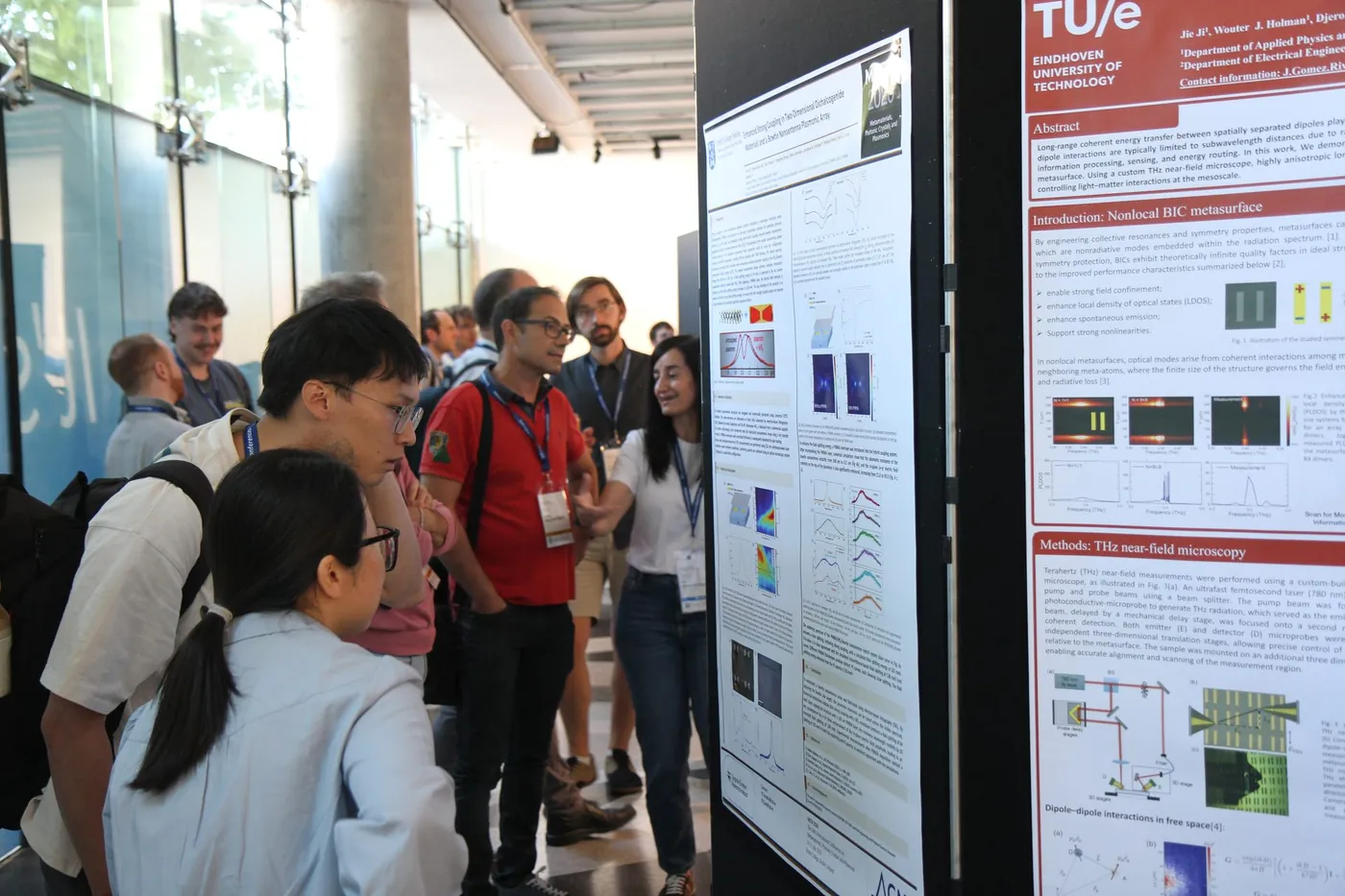
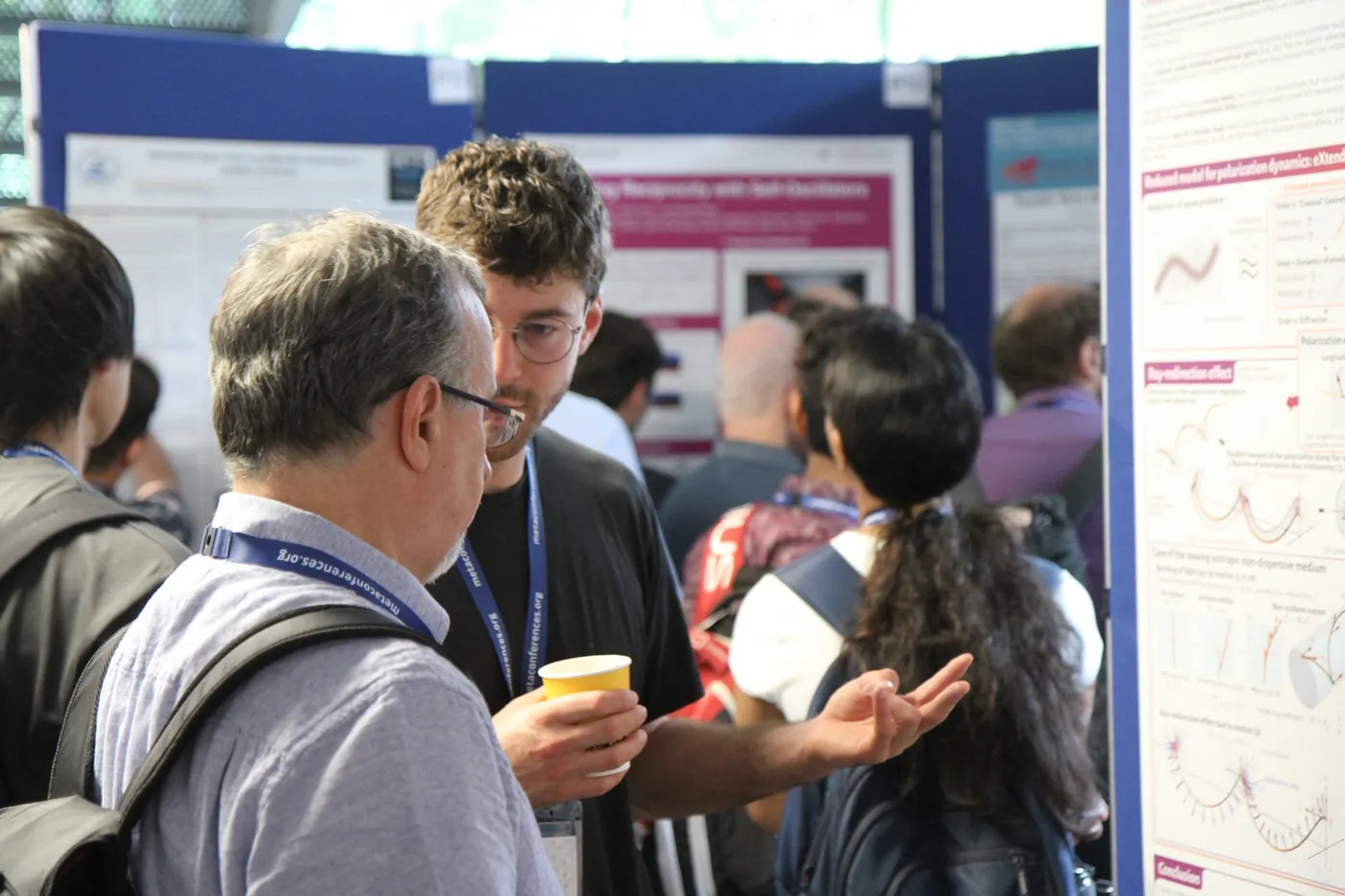
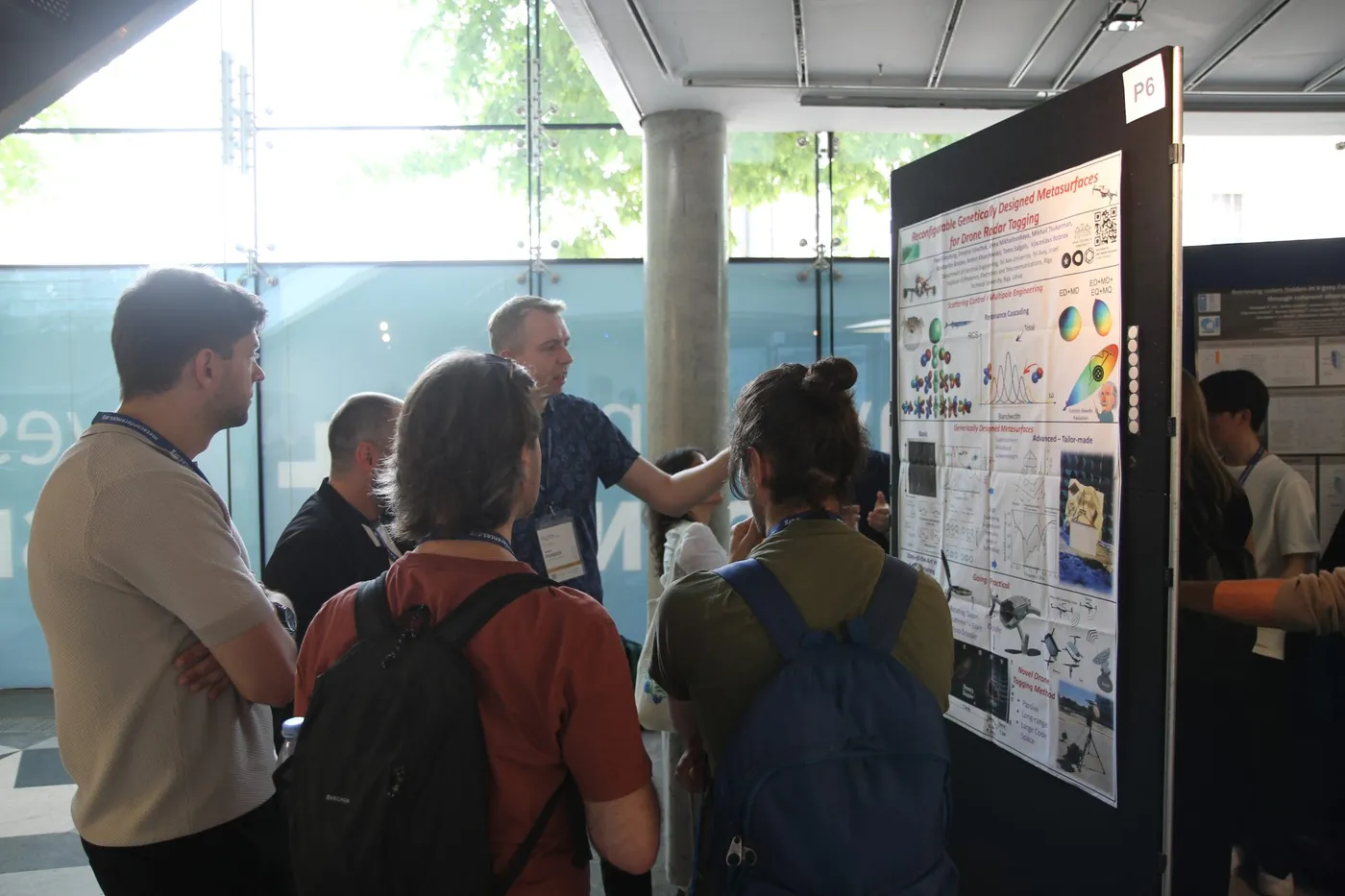
Researchers listening to a poster presentation at META 2026, Trinity College Dublin
Presenting a poster META 2026, Dublin

Presentation formats

Three ways to present

Oral

15-minute contributed oral presentation within a technical session.

Poster

A dedicated 40-minute session for in-depth discussion with interested researchers. Posters offer time for detailed feedback, new connections and potential collaborations, and may be considered for the Best Poster Award under the published award criteria.

Invited

20-minute invited presentation within a special session, symposium or the META Quantum Nanophotonics Workshop.

Special Sessions

Shape a scientific session

Researchers are invited to propose Special Sessions addressing focused or rapidly developing areas within the scope of META 2027. Proposals should identify the scientific theme, the organizers and prospective contributors.

Propose a Special Session

Key dates

The road to Niagara Falls

Call for Papers
September 1, 2026
Acceptance Notifications Begin
February 19, 2027
Early Registration
until April 23, 2027
META 2027
July 13–16, 2027

Author resources

Everything you need

Bring your research to Niagara Falls

Start a SubmissionPrepare Your Submission Create Your META Account Sign In Download the CFP